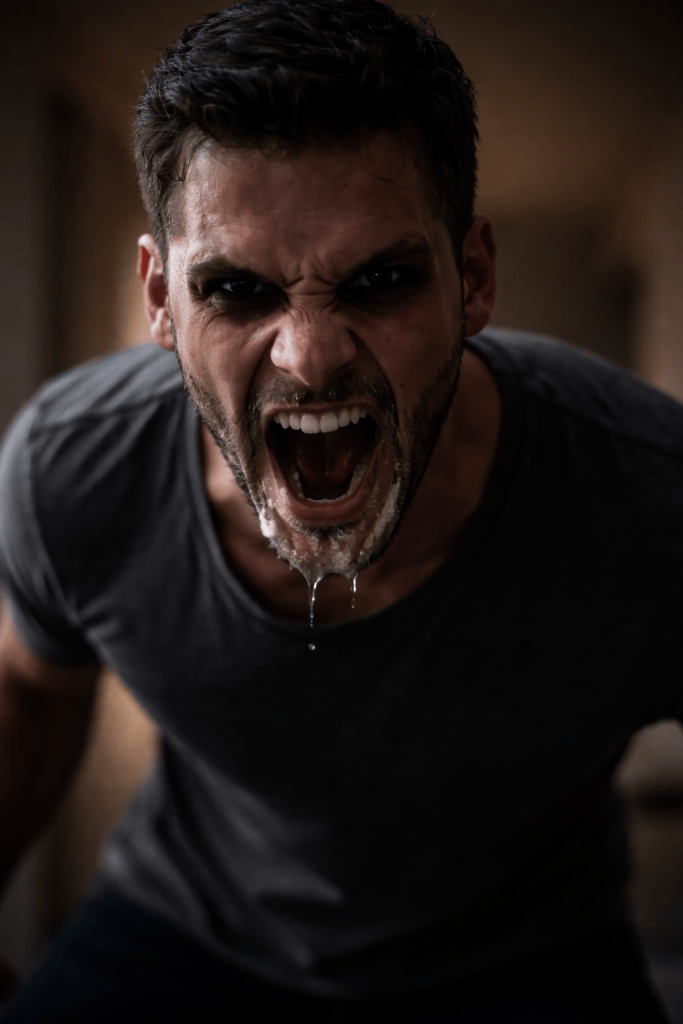
You remember the shift.
Not loud.
Not dramatic.
Just a flicker.
The eyes went black and the room changed.
No one else ever seemed to notice it.
But you did.
You learned to read weather.
Pressure drops.
Air thins.
The storm stands up in human skin.
The temperature of a room can change without a window opening.
You stopped complaining.
You stopped explaining.
You detached before the first word even landed.
Silence became your early warning system.
You would sit there, quiet, and measure the space between breaths.
Independence didn’t feel empowering.
It felt necessary.
You stopped expecting help.
You protected your privacy so there would be nothing left to weaponize.
You learned not to ask twice.
Alone became safer than company.
Alone didn’t shift its eyes.
Across from you, chemistry was brewing.
Adrenaline.
Cortisol.
Noradrenaline.
Breath slowing, but not in peace.
Muscles tightening.
Vision narrowing.
The prefrontal cortex stepping aside.
The amygdala gripping the controls.
Logic clocked out.
Instinct clocked in.
The mind no longer negotiating.
It chooses only two doors: attack or endure.
Snap.
Like a twig under a boot.
Foam at the mouth.
Words without memory.
A story rewritten by morning.
You were negotiating with someone who would not remember this version of themselves.
And you would be expected to forget it too.
Empathy gone.
Eyes black.
The predator fully present.
And here is the part that isn’t said out loud:
When a person’s eyes turn black, it is not darkness entering.
It is restraint leaving.
When logic disappears, it is not confusion.
It is permission.
When someone becomes unrecognizable,
ask yourself who taught them they could.
You stayed quiet to see who would notice.
They stayed loud to see who would tolerate it.
You detached because you didn’t feel safe.
They escalated because they felt powerful.
Two nervous systems in one room.
Only one hunting.
You can joke about it now.
Call it intensity.
Call it stress.
Call it a bad night.
But read it slowly.
Who loses their humanity first —
the one who goes silent,
or the one who stops seeing the person in front of them as human?
Who forgets by morning —
the one who endured,
or the one who erupted?
Who becomes the werewolf —
the one cornered,
or the one who enjoys the corner?
If the soul leaves a body during violence,
does it leave the one attacking,
or the one surviving?
You already know.
Black eyes are not mysterious.
They are rehearsed.
And when peace leaves a room,
it does not walk out with the quiet one.
It follows the one who still has something to protect.


Leave a comment