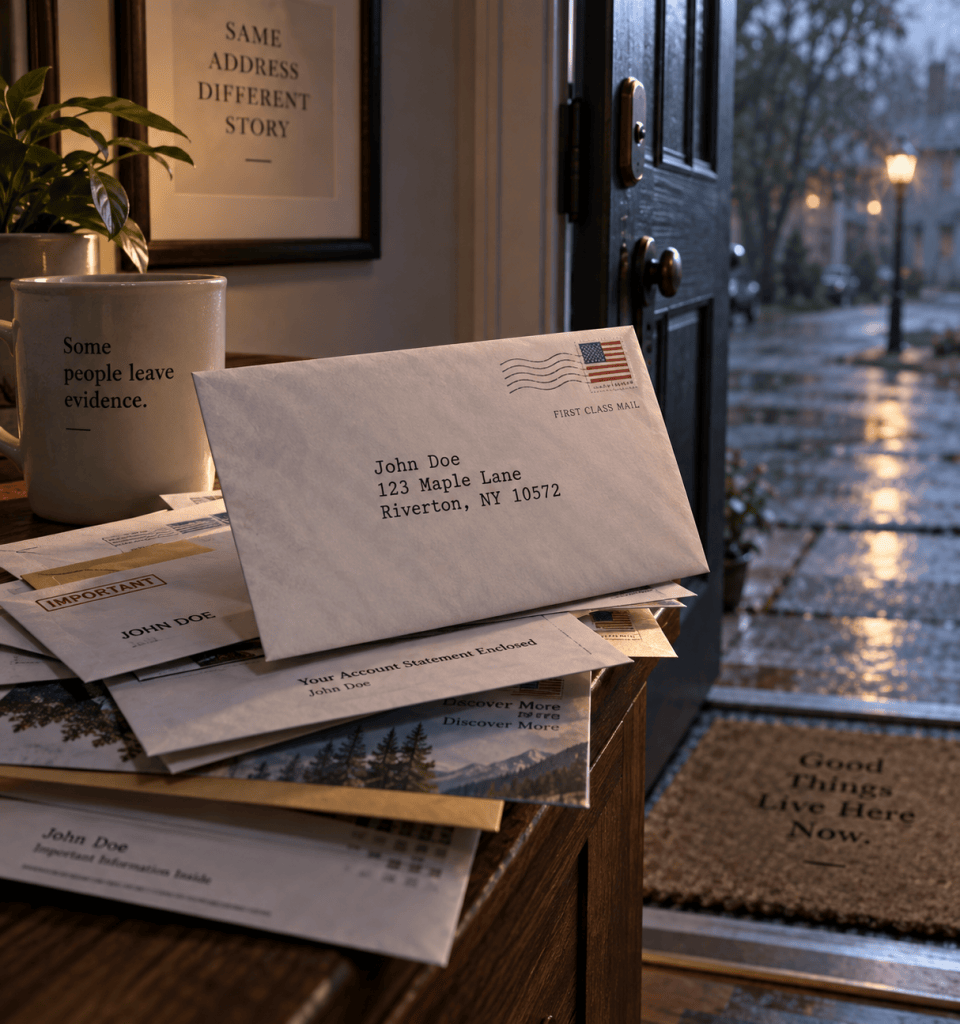
The mail kept coming.
Suddenly, you stop calling them by the name you had for them, and you start calling them by their government name. Then you drop the first name. Eventually, the only thing that remains is the last name you see in the mailbox.
It happens without ceremony.
The envelopes arrive between electric bills and advertisements, carrying a name that once belonged everywhere. It had been written on birthday cards, whispered across rooms, saved in a phone, scribbled beside appointments and attached to plans that reached years beyond anyone’s reasonable authority to promise them.
Now it appears through a little glass window above an address where that person no longer lives.
The first few pieces get placed carefully on the counter.
Then they move to the corner.
Eventually, there is a pile.
Insurance notices. Something from the bank. A catalog addressed to a person the catalog company apparently believes still has excellent taste and permanent residency. An envelope marked IMPORTANT that cannot possibly understand how unimportant it has become.
The post office knows nothing about endings.
It recognizes streets, numbers, cities and ZIP codes. It does not recognize the peculiar geography of people who once occupied the same place and somehow ended up living countries apart without either of them moving very far.
So the mail keeps coming.
There is something almost gothic about seeing a familiar name printed beneath your own address. It feels like correspondence intended for the dead, except the dead person is presumably somewhere drinking coffee, paying taxes and answering emails while their paper ghost continues arriving at your house.
At some point, you stop moving the envelopes to the counter.
You leave them by the door.
The name has become administrative.
You notice this one morning while holding an envelope between two fingers. There was a time when seeing that name could rearrange an entire day. Now you are mostly irritated because whoever designed the envelope used enough glue to survive the apocalypse.
You turn it over.
No forwarding address.
Of course there isn’t.
Some people leave coordinates. Others leave evidence.
A coffee cup survives in the back of a cabinet. A forgotten charger remains plugged into a wall. Something inexplicable stays buried beneath the passenger seat. Their name continues appearing on envelopes long after conversation has become unnecessary.
The house slowly corrects itself.
Drawers acquire different purposes. Empty spaces stop looking empty. The refrigerator forgets what they liked. Even the walls seem to lose interest in remembering where things used to hang.
Only the mailbox remains stubborn.
Weeks later, another envelope arrives.
You look at the last name through the little plastic window and realize you haven’t spoken the first name aloud in a very long time.
There is no sadness in the discovery.
There is something stranger.
Distance has finally become ordinary.
You pick up a pen, draw one clean line through the address, and write three words across the front.
RETURN TO SENDER.
You almost write more.
You don’t.
The mailbox closes with a small metal click, and somewhere between your house and wherever lost things are supposed to go, the letter begins its journey back to a sender who still believes they know where to find them.
You go inside.
Tomorrow’s mail will come whether anyone belongs there or not.


Leave a comment