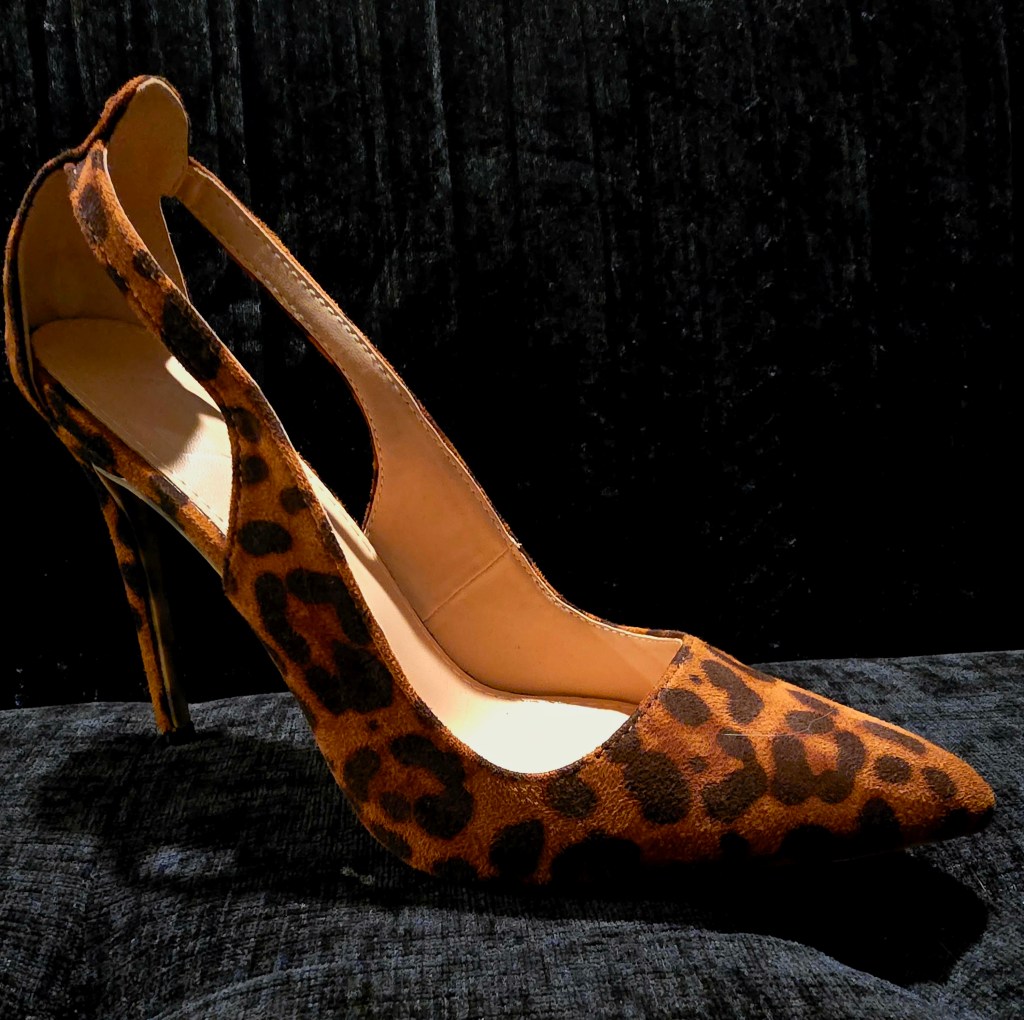
I told them I wanted you to feel what you had put me through.
Not to punish. Not to see you break. Just so, for a single fractured hour, you could look out of my eyes and know the rooms I learned to live inside.
There is a particular cruelty to being moved through someone else’s story without your consent. You think you are the cartographer, mapping another’s contours for your comfort. You think you are only teaching them how to bend. Then the map you drew folds and tucks itself into the pockets of your own coat, and you forget you ever held the pencil.
So I asked the world to hand you the shoes you left on the floor. I asked for those narrow, unpadded shoes that pinched and scraped because I wanted you to know the small betrayals that add up until the bone remembers them. I wanted you to know the way a body learns to step around a hazard it can no longer name. I wanted you to understand how long the slow numbness takes to thaw.
They said I wanted revenge. They said I wanted to haunt the echo of what you did. But revenge is loud. What I wished for was quieter and truer. I wished for humility. I wished for a mirror that did not lie. I wished for the small, terrible lesson of recognition: that the pain you hand out like change sometimes comes back with the exact same weight.
The grapevine had its way with the news. Whispers slipped like dark leaves and settled at my feet. I heard you had tasted the echoes of your own choices. There was no great epiphany. There was no sudden, cinematic unmaking of the man who cast the first stone. There was only the slow, domestic ache I used to keep company with. There was discomfort, a tightness behind the ribs, a day when you wanted to give up on the whole of it and could not say why.
That was enough. Not because I wanted to see you fall, but because finally the world made room for a balance. You learned, briefly, what I had learned over and over. You learned that some lessons do not arrive dressed as teachers. They arrive as ordinary weather. They arrive as a sore heel after a long day. They arrive as a ripple across still water, and then the ripple disappears and the surface looks the same.
There is a hidden thing in all of this that I am careful about. The shoe you wore was never mine to give and never yours to borrow forever. I outgrew them. I found shoes that fit, thick-soled shoes with room for my toes and my stubbornness. I walked out of the rooms where your voice still echoed and I learned the exact shape of my own steps. The lesson you taught should never have been taught because lessons are brittle when learned through other people’s cruelty. But since the world insists on being a teacher, I let the ripple do its work and I stepped on.
In the gallery of what we call justice there is often only one painting: the portrait of consequence. It hangs somewhere near the fogged window. People stand before it and try to name the colors. They ask whether the portrait changes the painter, whether the painter ever sees their own hands. I can only say that the portrait is not vindication. It is information. It is the smallest possible honesty.
You felt what you had put me through without the grace of understanding. There was discomfort but no revelation. There was a thin knowledge but not repentance. That, I suppose, is the bitter part. Mercy would have been a clean thing. Mercy would have looked like a sudden, honest apology. Instead you received a lesson and continued to be the person who receives lessons without letting them settle. This is the world’s way. It teaches with repetition until the pupil either learns or becomes tired of the classroom.
So what becomes of me? What becomes of us who ask the world to return the things we were given without consent? I keep my new shoes close. I let the memory of the old ones act as a reminder, not a throne. I practice walking past the windows where our shadows used to meet. I listen for the grapevine and I do not let it name me. I let the ripple wash over and leave only cleaner water behind.
There is a small altar of things I do not carry anymore. On it I place the memory of the hurt, not as a talisman to wield but as a compass. I trace the scar and then I turn my palm so the light can rest there without moving in. The hidden meaning in all this is not the sweet taste of comeuppance. It is a lesson about possession.
You cannot own another person’s interior. You cannot fit their whole life into the sizing you prefer. Shoes tell the truth about that. A shoe that does not fit will cut you eventually. The only way forward is to find footwear that respects the shape of your foot and to take off the shoes that were never yours.
If the ripple taught you anything at all it was the shape of cause and consequence. If the ripple did not teach you mercy then it taught you, at least, the geography of discomfort. You might step carefully now. You might carry the memory of how it felt. Or you might not. Either way the moon will rise, and someone else will learn how to walk.
I wanted you to feel what you had given me so that you might finally know. That knowledge, even when partial, is a kind of night watch. It keeps the future from being entirely ignorant of the past. It is not a public execution. It is a private inventory.
Tonight I set the old shoes by the door and I lock it not out of spite but out of courtesy. There are new paths ahead and my feet have learned their own direction. The shoes you once abandoned will gather dust. The ripple will fade. And in the quiet between one step and the next I will listen for only the sound of my own shoes on the floor.


Leave a comment