Let’s talk about hate for a second.
The all‑consuming kind that stalks the hallways of your chest, gnawing through the drywall of your ribs until the whole place echoes. Hate that hollows the heart, fogs the windshield, steals the keys, then tells you to drive. Hate that makes you swallow anything—rumors, half‑truths, poison—so long as it’s served by a voice that calls itself honest.
Through that lens, everything looks like absence.
The cupboards are always bare.
Luck leaves the room before you arrive.
And every time the floor creaks you think the bottom is falling out again.
In that world they are never wrong.
They do no wrong.
Everyone else is the problem, a lineup of cardboard villains waiting to be blamed.
Walks like a duck, quacks like a duck—fine, it’s a duck. But the duck keeps insisting it’s a swan and the pond is conspiring against it.
They sling lines like “Ride your life of failure straight to hell,” print it on a greeting card that nobody asked for, then boast about loyalty when all they’ve ever sold are exits. Sour enough to rot the whole basket, yet shocked when the fruit turns on them. A crack forms, light tries to get in, but they sprint for a new stage, a new audience, a fresh set of ears to stuff with their half‑melted wax.
It’s almost funny, isn’t it?
Some folks write the warning labels.
The rest of us read them.
And while they waste battery life on conspiracy theories about how the universe has a personal vendetta, the rest of us learn a quiet fact: most people think about you far less than you fear. Everyone is busy starring in their own saga, elbows deep in their own nonsense. You’re just a distant constellation—noticed only when you shine in a patch of sky they wish they owned.
So we burn the bridges that lead back to rooms we never belonged in.
We pack light: no childish gossip, no sugar‑coated spite, no recycled bitterness.
We let the fortune‑cookie wisdom crumble somewhere behind us and walk on without crunching it underfoot.
Adult life is mainly about spending energy like currency. Revenge costs too much. The cheaper, richer payoff is building the dream, staking the flag, waking up in mornings that taste like freedom instead of grudges. Conquering every hill on the way is the loudest silent answer to anyone who wagered on your downfall.
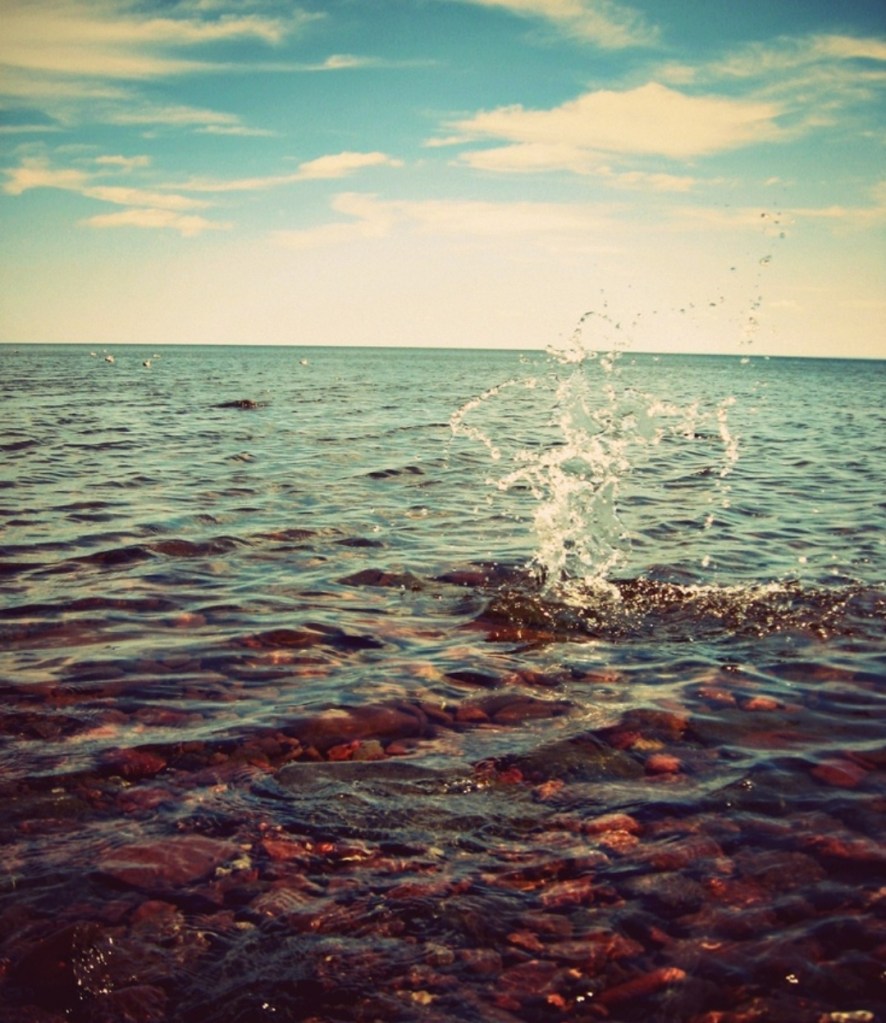
Still, hate hangs around like static electricity—you feel the crackle when the weather is dry. So we give it to the water.
Find a river, a lake, the restless lip of an ocean.
Bring a letter, an old ID, a scrap of something that once held weight.
Speak the name, speak the hurt, then let the tide swallow both.
Where earth meets water meets sky meets stars, the current knows how to carry curses downstream, how to smooth even the sharpest stones.
Because the opposite of love isn’t hate, it’s nothing.
No heat, no pulse, no orbit.
Erase the name from your mouth, clear the playlist, let the memory pixelate.
What’s left is calm water, untroubled until you choose to stir it.
And when you do toss that final stone, watch the circles run.
Notice how quickly the surface forgets the disruption.
Notice how quickly you can forget, too.
A ripple in still water won’t leave you dead.


Leave a comment